Decoding the "Golden Glow": The Madeira vs. Palmeira Grading Standard
A buyer usually lands on this question after seeing a citrine described as “Madeira,” “Palmeira,” “sherry colored,” “amber,” or a “deep red-orange gemstone” and wondering whether those words mark a real grade.
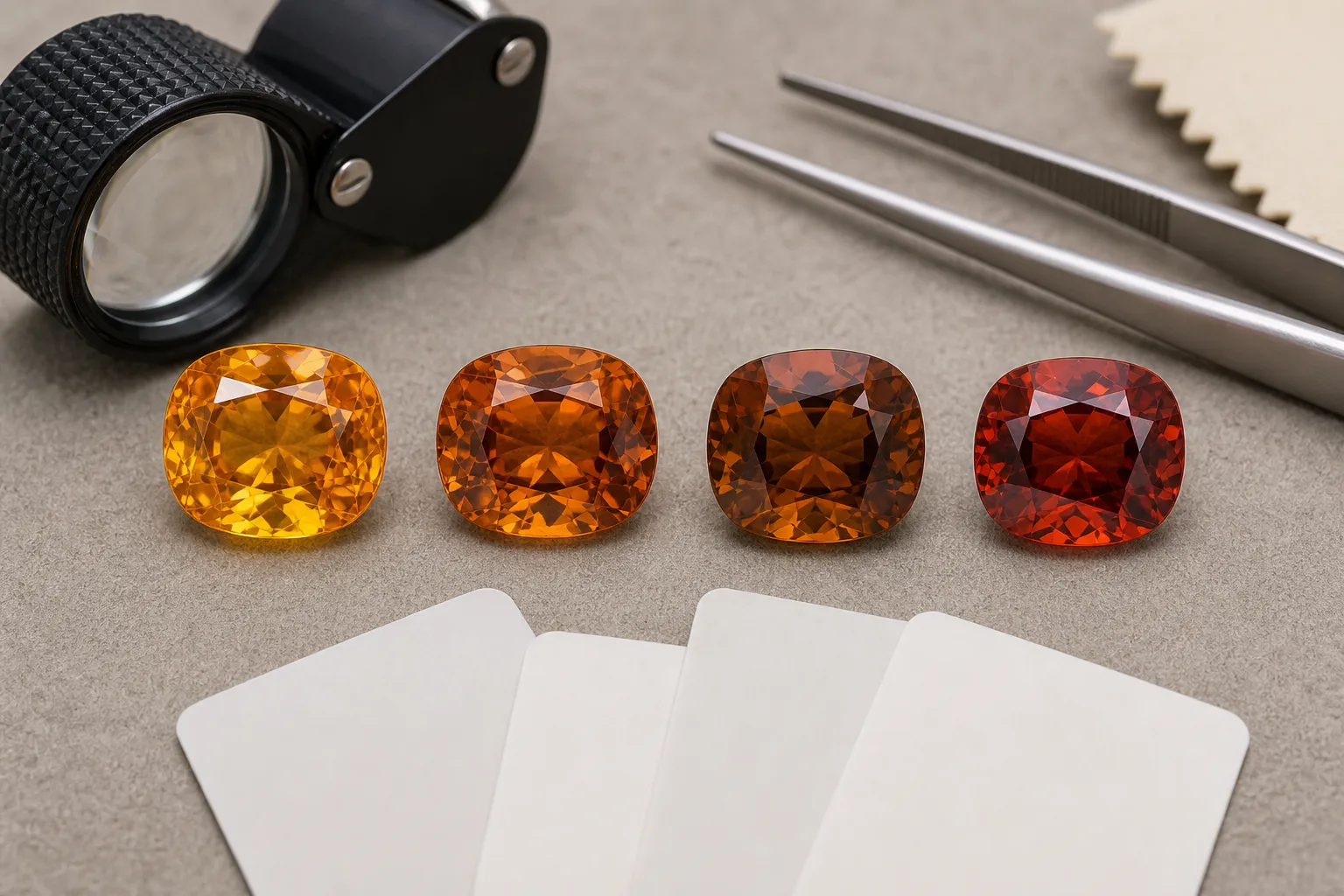
The useful answer is narrower than many listings suggest: Madeira Citrine Grading is best read as market color language, not a universal laboratory grading system. The names can still help you compare stones, but only after you translate them into visible traits: hue, tone, saturation, red-orange balance, brown or amber modifiers, transparency, cut, lighting, and treatment disclosure.
A rich golden glow may be beautiful. The name attached to it does not, by itself, prove natural origin, rarity, value, or gemological rank.
broader context
Start with the main citrine page
This narrower page works best after the broader citrine reference page.
Madeira and Palmeira are trade-color signals, not mineral categories
Citrine belongs to the quartz family. That matters because it keeps the conversation grounded before the color names take over. “Madeira,” “Palmeira,” “sherry,” and “amber” do not describe separate mineral species. They are market-facing color terms used to point buyers toward a look.
In practical use, Madeira citrine usually suggests a stronger warm color: deep golden orange, red-orange, brownish orange, or a sherry-like warmth. The word “Madeira” borrows from fortified-wine color language, so it often implies a richer, warmer, sometimes slightly reddish orange appearance.
Palmeira citrine is less consistently defined in public-facing material. When the term appears, it often sits near amber, golden-orange, brown-orange, or warm orange-yellow impressions. A “Palmeira amber hue” may suggest a softer, earthier warmth than a strongly red-orange Madeira description, but that is a trade convention, not a fixed threshold.
If one seller calls a stone Madeira and another calls a similar stone Palmeira, the word alone does not settle the comparison. The label has to be checked against the stone’s actual color behavior.
Madeira citrine
Is the hue orange, red-orange, or brownish orange? Is the color rich without becoming muddy?
Sherry colored citrine
Is there a wine-like warmth, or is the term making a brownish stone sound more desirable?
Palmeira amber hue
Is the stone golden amber, orange-yellow, brown-orange, or simply dark under warm lighting?
Deep red-orange citrine
Is the red modifier visible in neutral light, or mostly in edited photos?
Golden glow
Is the brightness coming from the gem’s color and cut, or from lighting, background, and camera exposure?
That is the real value of the so-called Madeira vs. Palmeira grading standard: not a formal table, but a buyer’s way to decode warm citrine color language without treating the trade name as evidence.
The color variables that actually change the judgment
Listings often compress several color factors into one attractive name. A careful comparison separates them again.
Hue: yellow, orange, red-orange, or brown-orange
Hue is the basic color direction. Citrine may be described across yellow, orange, and brownish-orange ranges depending on the material and viewing context. A Madeira-style description usually depends on a more orange to red-orange impression. A Palmeira-style description often leans toward amber or golden-orange language.
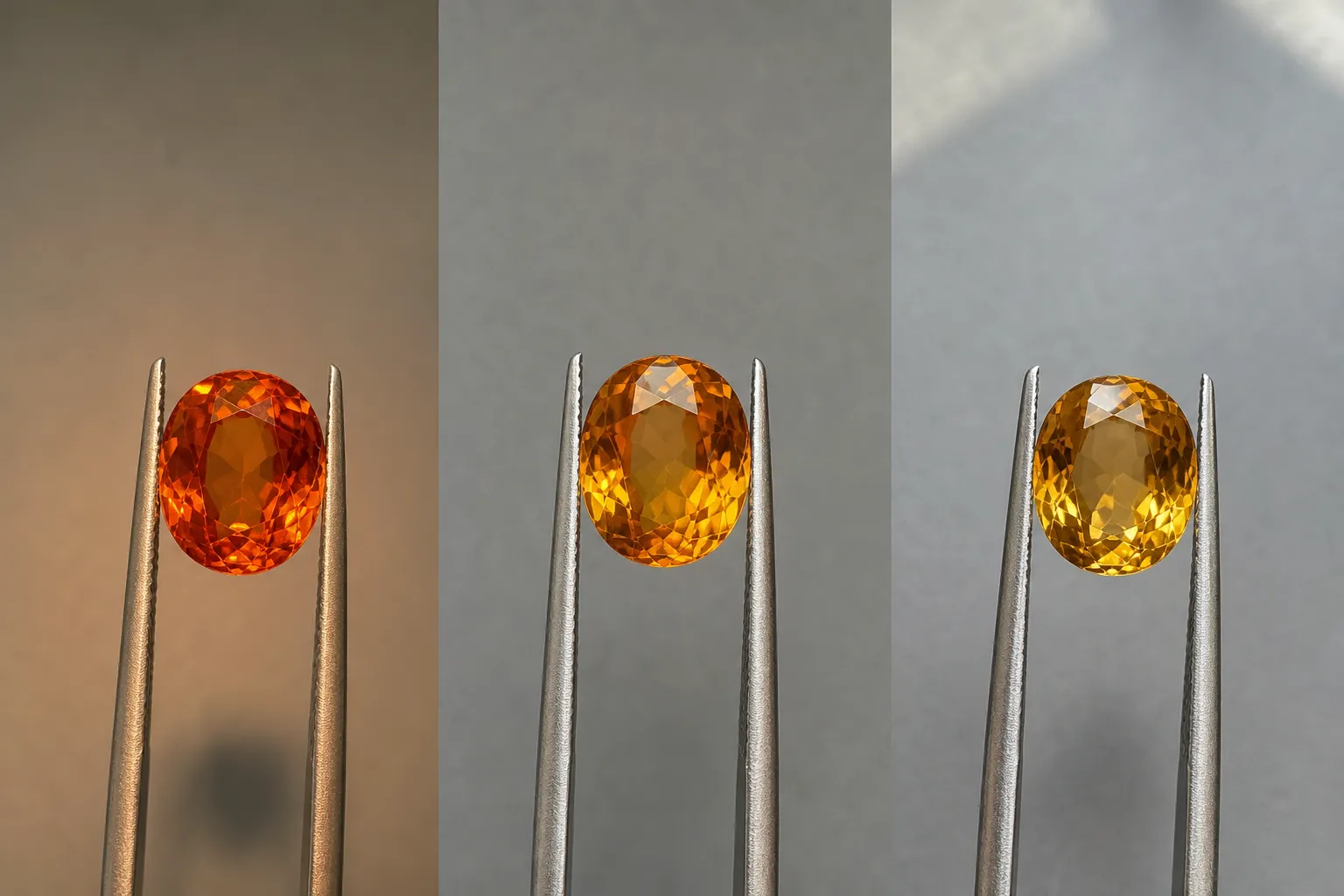
The difficult part is that red, orange, yellow, and brown can overlap in ordinary photos. A stone may look red-orange under warm indoor light, brown-orange against a dark background, and golden yellow in daylight-balanced lighting.
A better buyer question is not “Is this officially Madeira?” but:
- Does the stone show a clear orange body color?
- Is there a visible red modifier, or is it mostly yellow-orange?
- Does the brown or amber modifier add warmth, or make the stone look dull?
- Does the hue stay recognizable across more than one lighting condition?
Saturation: vivid warmth versus weak color
Citrine color saturation is the strength or intensity of the color. A vivid orange stone and a pale yellow stone may both be citrine, but they will not create the same visual effect. This is one reason market language often connects stronger color with “vivid gemstone value.”
Still, stronger is not automatically better. High color concentration can look dramatic, but if the tone is too dark or brown modifiers are too heavy, the stone may lose liveliness. A pale stone may be less dramatic yet brighter, cleaner, or better suited to certain jewelry designs.
A Madeira-style stone is often expected to show stronger saturation than a light lemon-yellow citrine. A Palmeira amber look may be saturated or moderate, depending on whether the amber modifier appears clean and glowing or flat and brown.
Tone: light, medium, deep, or dark
Tone is the lightness or darkness of the stone. A deep red-orange citrine can look luxurious when it remains transparent and lively. The same depth can look heavy if the cut traps darkness or the color becomes too brown.
This is where buyers often misread “deep” as “high grade.” Deep tone is only one variable. One stone can be deep but sleepy; another can be medium-toned but brighter, cleaner, and easier to wear.
Color research often separates lightness, chroma, and hue because those dimensions do not move together perfectly. Buyers do not need lab instruments to use the idea: do not let one adjective do the work of a full color evaluation.
Brown and amber modifiers: warmth or muddiness
Citrine trade language often depends on modifiers. “Amber hue” may be visually accurate when the stone has a warm, honeyed, orange-gold body color. Brown modifiers need more caution. A small amount of brown can create a rich sherry colored citrine impression. Too much can reduce brightness.
This is one reason Madeira and Palmeira language becomes slippery. Both may involve orange-brown warmth. Madeira usually implies a more intense orange or red-orange warmth; Palmeira may lean more amber or golden-brown. The same stone could still be marketed differently depending on the seller’s vocabulary.
Transparency and cut: color does not act alone
A color name can hide weaknesses in transparency or cut. Citrine is often faceted, and windowing, extinction, pavilion depth, and facet arrangement affect how the color appears. A stone with attractive body color can still look uneven if the cut creates dark patches or washed-out areas.
Step cuts and broad facets can make color zoning, inclusions, or extinction more visible. Brilliant-style cuts may scatter light differently and make a medium color seem livelier. None of this changes the mineral identity, but it changes the buying judgment.
When comparing Madeira vs. Palmeira citrine, compare stones of similar size, cut style, and transparency when possible. Otherwise, you may be comparing design effects more than color categories.
Why photos and lighting make the “golden glow” hard to trust
“Golden glow” works because it feels immediate. You see a warm stone on a screen, and the color seems self-explanatory. Gemstone color, however, is highly sensitive to viewing conditions.
Controlled color work uses defined light sources, backgrounds, and color systems because small changes in observation can change the result. That does not mean every buyer needs a colorimeter. It does mean a single seller photo, especially one taken under warm lighting, is a weak basis for deciding whether a stone is truly red-orange, amber, or sherry colored.
Watch for signs that the photograph may be doing too much work
- The background is very warm, beige, brown, or gold.
- The seller shows only one lighting condition.
- The stone appears dramatically red-orange in one image but yellow in another.
- Reflections are so strong that the body color is hard to read.
- The listing relies more on poetic color names than on clear images or disclosure.
Daylight-balanced or neutral lighting is not a guarantee, but it is more useful than a single candle-warm image. If a listing claims a deep red-orange gemstone appearance, ask whether the stone has been photographed under neutral lighting, indoor lighting, and indirect daylight. Multiple views can reveal whether the red-orange balance is stable or mostly a lighting effect.
A practical inspection sequence
- Start with body color. Ignore the label for a moment. Is the stone yellow, orange, red-orange, brown-orange, or amber-gold?
- Check tone and saturation together. Is it vivid and lively, or mostly dark?
- Look for brown modifiers. Do they enrich the color or flatten it?
- Compare images across lighting. Does the same color family persist?
- Ask about treatment disclosure. Do not let color language replace material information.
- Compare similar stones. Size, cut, clarity, and setting color can all change the impression.
Treatment disclosure is separate from the Madeira or Palmeira name
A trade color term does not tell you whether a citrine is natural-color material, heat-treated material, or amethyst that has been heated into a citrine-like color range. Gemological and academic sources support the broader context: citrine is quartz, heat treatment is relevant in quartz, and treatment disclosure matters in the gemstone market.
The reverse is not safe either. You cannot look at the word “Madeira” and conclude a stone is treated, and you cannot look at “Palmeira” and conclude it is untreated. A deep red-orange appearance also does not prove natural color. Color language and treatment history are different questions.
This is where many buying mistakes begin. A seller may use rich color language to imply desirability. A buyer may hear that as rarity or natural origin. Those are separate claims.
Useful questions are direct
- Is the stone represented as natural citrine, heated citrine, or heated amethyst sold as citrine?
- Is any treatment disclosed on the invoice, report, or product page?
- Is there an independent gemological report, and what does it actually state?
- Does the report identify the material as quartz/citrine?
- Does it comment on treatment, if applicable?
- Is “Madeira” or “Palmeira” being used as a color description only?
A recognized laboratory report may help with identity and certain disclosure questions, but the wording matters. A trade name in a listing is not the same as a lab grade. GIA, Gem-A, and mineralogical references support citrine’s quartz identity and treatment-aware context; they do not establish a universal Madeira-versus-Palmeira grading ladder.
What an honest Madeira vs. Palmeira comparison can and cannot tell you
A careful comparison can help you choose the look you prefer. It cannot provide more certainty than the evidence supports.
It can help you describe color more cleanly
Instead of saying “I want the best Madeira,” you can say:
- “I want a medium-deep orange to red-orange citrine.”
- “I prefer strong saturation without a muddy brown cast.”
- “I like a sherry colored citrine, but I want it to stay bright in neutral light.”
- “I prefer a Palmeira amber hue with golden warmth rather than heavy brown-orange.”
That language is more useful with a seller or jeweler. It also reduces the chance of paying extra for a name while receiving a color you did not actually want.
It can help you compare similar stones
If two stones are both transparent quartz/citrine, similar in size, similarly cut, and similarly disclosed, then color language becomes more meaningful. You can compare whether one has stronger red-orange balance, cleaner amber warmth, better saturation, or a more pleasing tone.
If one stone is larger, one is darker, one has a better cut, and one has unclear treatment status, the Madeira/Palmeira distinction becomes secondary. The buying decision should not collapse into the label.
It cannot prove official grade
No reliable evidence in the available source set supports an official citrine grading standard that defines Madeira and Palmeira with fixed thresholds, rankings, or price rules. The “standard” in this title should be read as a market decoding framework, not an institutional system.
Be cautious with listings that imply otherwise. Phrases such as “AAA Madeira,” “investment-grade Palmeira,” or “certified sherry color” may be commercial shorthand unless tied to readable documentation and transparent criteria. Even then, a seller’s internal quality language is not the same thing as a universal laboratory standard.
It cannot determine value by color name alone
Color matters, but value is not created by one adjective. A realistic purchase judgment includes:
- material identity
- treatment disclosure
- color appearance in neutral viewing
- tone and saturation balance
- transparency
- cut quality
- size and carat weight
- inclusions or zoning
- setting design
- seller reputation and return policy
- documentation, when relevant
A vivid stone may command attention, but deeper red-orange is not automatically better for every buyer or every piece of jewelry. A lighter golden citrine can be more wearable in daily settings. A warmer amber stone may suit yellow gold beautifully. A darker sherry tone may appeal to someone who likes saturated warm gems but look heavy in a closed-back setting.
A buyer’s working frame for Madeira Citrine Grading
Use the label as the beginning of the conversation, not the conclusion.
If a stone is called Madeira, the listing should justify that word with visibly rich orange, red-orange, or sherry-like warmth. If it only looks brown in neutral light, the name may be doing too much work.
If a stone is called Palmeira, look for the promised amber or golden-orange character. If the stone is simply pale yellow or flat brown-orange, ask for better images or clearer description.
If a stone is described as sherry colored citrine, inspect whether the warmth is lively and transparent or merely dark. “Sherry” should help describe color, not disguise muddiness.
If the listing leans on golden glow, check the lighting. Glow can come from good cutting and attractive color, but it can also come from warm bulbs, reflective props, and photo editing.
A clean decision frame
- Name: What trade term is being used?
- Visible color: What hue, tone, and saturation do I actually see?
- Modifier: Is the stone red-orange, amber, brown-orange, or golden yellow?
- Light behavior: Does the color remain appealing in more than one lighting condition?
- Material question: Is the stone identified as citrine/quartz, and is treatment addressed?
- Purchase judgment: Does the total stone justify the price, not just the name?
That approach respects the usefulness of trade language without letting it become false authority.
next questions
Verification notes to read next
These pages continue the citrine topic through more specific verification and context questions.
FAQ: Madeira, Palmeira, and citrine color terms
Is Madeira citrine an official grade?
Not in the universal laboratory sense. Madeira is best treated as a trade-color description for rich warm citrine, often orange to red-orange or sherry-like. It should not be read as a formal GIA, Gem-A, or mineral database grade.
Is Palmeira citrine lower quality than Madeira?
The available evidence does not support a fixed hierarchy. Palmeira language often points toward amber, golden-orange, or brown-orange warmth, but quality still depends on the actual stone: color balance, transparency, cut, treatment disclosure, and overall appearance.
Does deep red-orange citrine mean the stone is untreated?
No. A deep red-orange appearance does not prove untreated origin. Treatment disclosure must be handled separately from color naming. Ask for clear seller disclosure and, when appropriate, independent documentation.
What is the safest way to compare Madeira vs. Palmeira citrine?
Compare observable traits under fair viewing conditions: hue, saturation, tone, brown or amber modifier, transparency, cut, and treatment information. Use Madeira and Palmeira as descriptive shortcuts, not as proof of grade, rarity, or value.