The Architecture of Earth: A Curation of Congo Quartz
As a veteran buyer and global mineral curator with three decades of experience navigating the opaque waters of the international gem trade, evaluating tens of thousands of specimens remains my primary directive. I have observed every conceivable iteration of quartz marketed under various historical context and subjective user experience frameworks.
Yet, when the conversation shifts toward the somatosensory design mechanics of specific geological anomalies, one particular material commands absolute reverence. Today, we are executing a comprehensive overview of one of the most misunderstood and fiercely coveted materials in the holistic aesthetic market.
We are stripping away the macro-level folklore to dissect the exact material craftsmanship, aesthetic geometry, and structural integrity of a true collector’s holy grail.
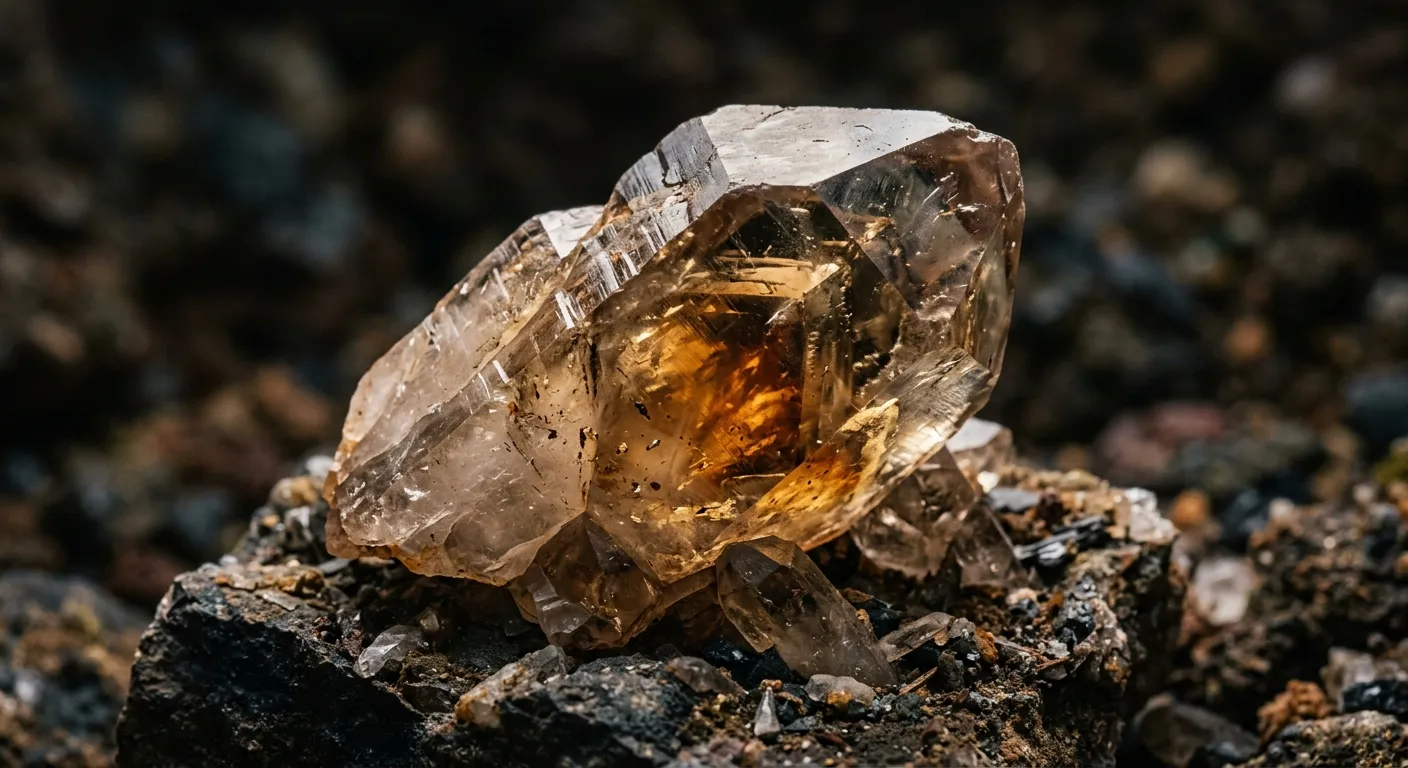
Precise Positioning & Core Metrics of the Congo's Golden Child
To understand the market positioning of this material, one must first discard the notion that all yellow quartz shares identical physical parameters. Within the realm of spiritual aesthetics and high-end curation, this specific stone occupies a hyper-niche, premium tier.
It functions not merely as a casual decorative trinket, but rather as an object of profound thematic analysis for collectors.
The Buyer’s Perspective: What is Kundalini Citrine?
Should you find yourself asking about its exact classification, you must look beyond the generic label of "yellow quartz." This is a highly specific, naturally occurring natural smoky citrine from the congo.
It represents a geological marriage between the grounding, earthy depths of smoky quartz and the clarifying, golden resonance associated with pure citrine varieties.
From a buyer's perspective, its market positioning remains elite due to its absolute scarcity and the primitive, labor-intensive extraction methods required to bring it to the surface. It serves as the ultimate connoisseur's choice for subjective spatial curation.
Morphological Integrity and Geometric Baselines
When evaluating a parcel of these stones fresh off a broker's table, physical metrics supersede marketing brochures. The absolute hallmark of this stone rests in its specific crystallization structure.
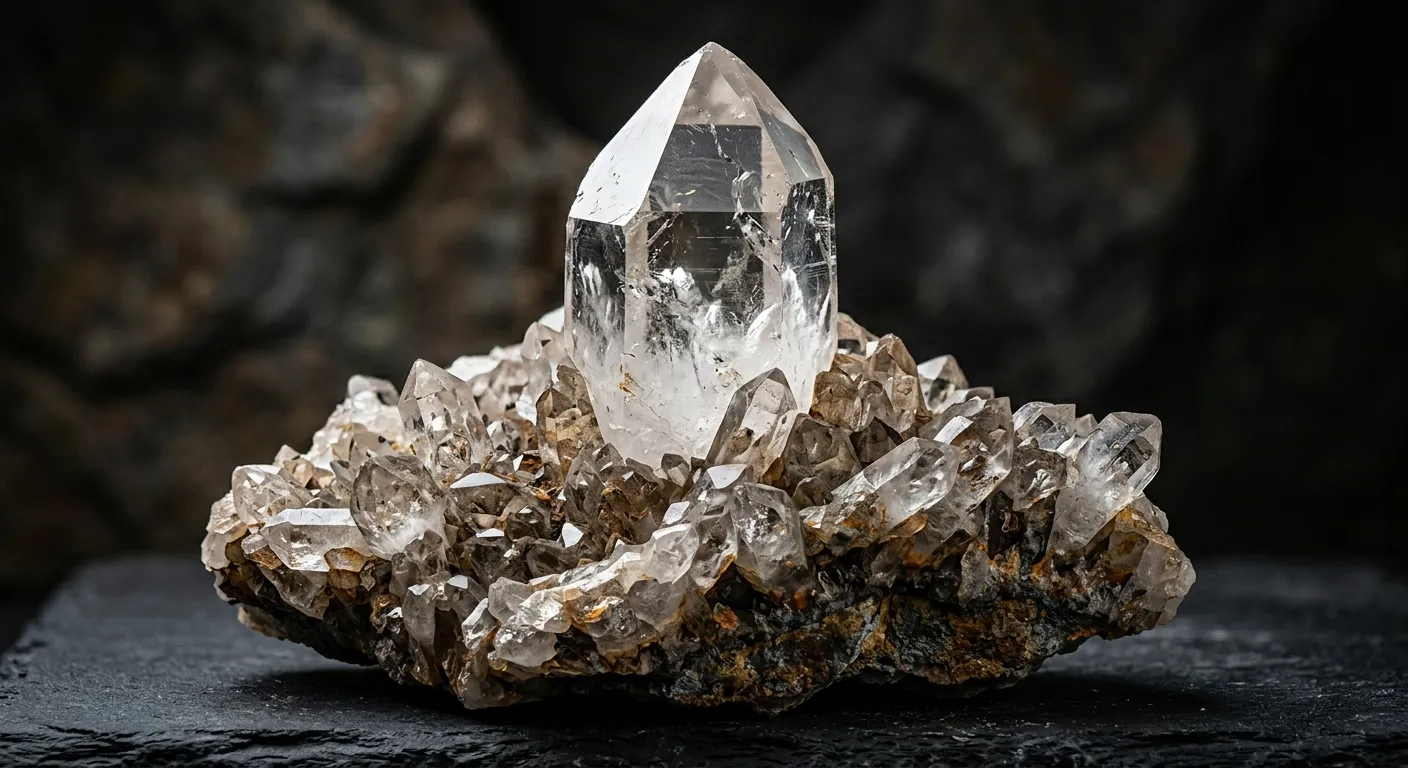
Assessors look for a prominent main point surrounded by smaller baby points at its base. If this cascading geometry is damaged or absent, the acquisition priority plummets.
Chromatic Depth and Zoning Parameters
The color must manifest as a natural, unadulterated champagne, pale honey, or deep smoky gold. Specimens should never exhibit the appearance of a neon highlighter or a piece of burnt candy.
Tactile and Thermal Resonance in Hand
Genuine specimens possess a distinct, dense thermal mass. They remain cool to the touch longer than glass forgeries and provide a subtle, palpable tactile feedback when held in the receiving hand.
Subjective Purity and Value-to-Cost Analysis
Because historical practitioners believe it filters environmental aesthetics, its perceived value ratio is exceptionally high. It acts as a subjective self-cleansing focal point, justifying its premium price point in high-end curation spaces.
The Metaphysical Blueprint: Geographical Origin and Nomenclature
The cultural significance of this material is inextricably linked to its geographical birthplace. The extraction zone is aggressively localized; it is found almost exclusively in the lwena region of the democratic republic of the Congo.
This isolated, mineral-rich earth imbues the stone with a physical density that cannot be replicated in a laboratory. The nomenclature surrounding its classification translates to the uncoiling of dormant potential—a subjective manifestation of the primal life force rising from the root to the crown within historical traditions.
Why the Extraction Zone Dictates Premium Valuation
The aforementioned extraction zone is fraught with infrastructural challenges. Because commercial, large-scale mining is virtually nonexistent here, extraction remains artisanal and sporadic.
While cascading crystals clusters are common within the veins of this specific earth, extracting them intact is a monumental feat. Purchasing a pristine specimen means compensating for the geographical rarity and the rigorous logistical journey it took to reach a display intact.
Deep Anatomy & Horizontal Comparison: The Authenticity Matrix
The holistic market operates as an absolute minefield of synthetic alterations and clever misdirections. Curating a truly authentic space requires developing an uncompromising, microscopic eye for material authenticity. We must horizontally compare the genuine article against the imposters that flood the market.
Structural Anatomy: The Funneling Formation
The physical architecture of this Congo material demands rigorous observation. The formation of a central, dominant apex is not just an aesthetic marvel; it represents the structural engine of its historical reverence.
This cascading geometry acts as a visual funnel, drawing the eye into the base and driving attention upward through the apex. Historically, this precise geometry is why it is revered for awakening the kundalini energy life force within cultural traditions.
Kundalini Citrine vs Common Citrine Analysis
This represents the most vital horizontal comparison in the industry. The visual difference between kundalini citrine vs common citrine (which frequently manifests as baked amethyst) is staggering once the exact parameters are understood.
Heat-treated amethyst presents an aesthetic tragedy; it features a stark, opaque white base that abruptly transitions into a harsh, burnt-orange or dark cheddar-colored tip. It is brittle, visually jarring, and structurally chaotic.
In stark contrast, the natural Congo material exhibits a seamless, uniform color gradient—a gentle, smoky honey hue that permeates the entire crystal from base to termination, with zero opaque white matrix. Collectors must meticulously distinguish genuine citrine from heat-treated amethyst to protect the integrity of their inventory.
Spectral Analysis: Natural vs Treated Quartz
The Irradiated Smoky Quartz Citrine Deception
While baked amethyst is relatively easy to spot, the irradiated smoky quartz citrine represents a far more insidious forgery. Unscrupulous overseas laboratories take low-grade smoky or clear quartz and bombard it with artificial radiation to induce a yellow tint.
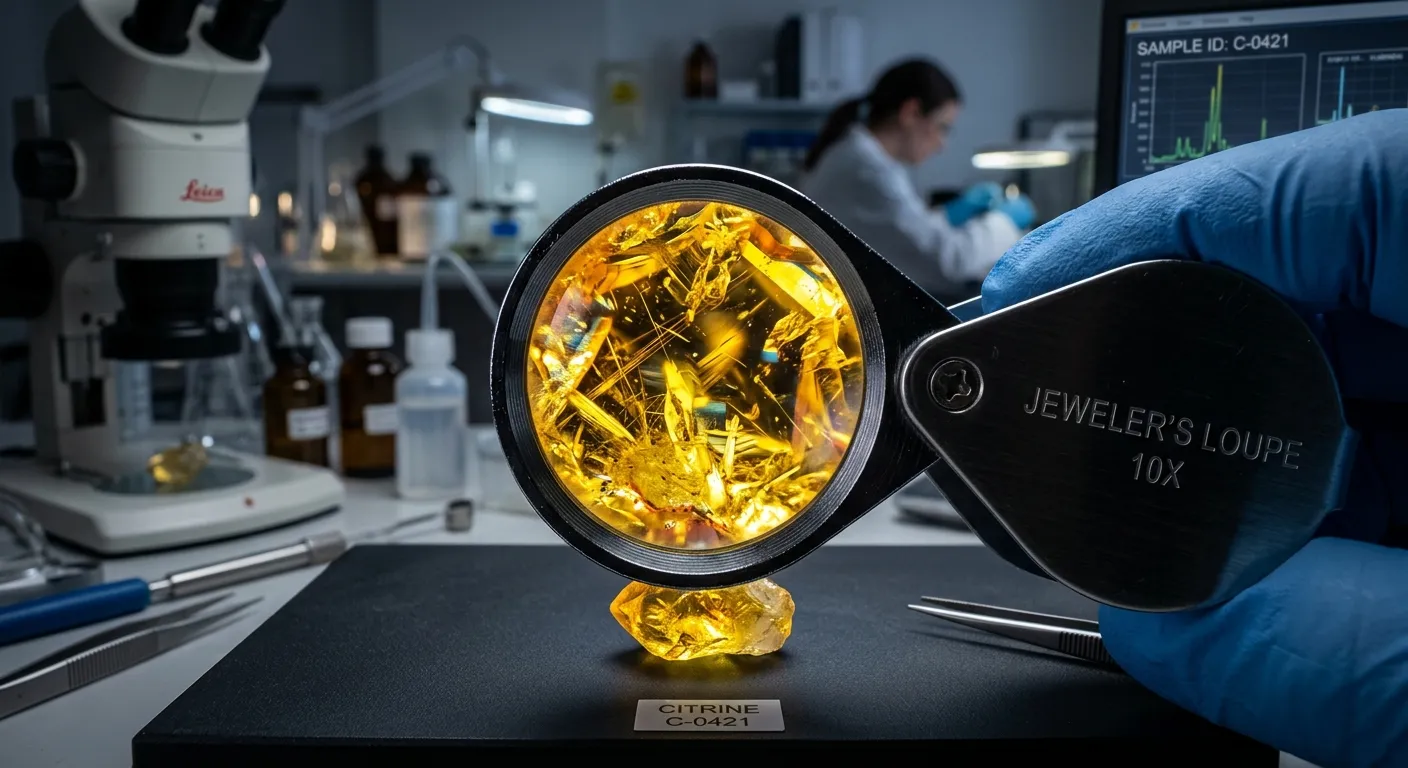
To the untrained eye, it mimics natural formation. However, under standard loupe magnification, the deception becomes obvious. Irradiated stones often possess a sickly, unnatural greenish-yellow undertone—a neon tinge that simply does not exist in natural geological formations. The genuine Congo material always leans toward warm, earthy, autumnal tones.
Sensorial and Tactile Feedback in Hand
Beyond visual inspection, the somatosensory experience of the stone provides vital data. Holding a genuine piece reveals an incredibly dense physical mass.
Culturally documented as a powerful yin stone of rising energy, it provides a deep, grounding tactile weight that slowly adapts to the temperature of the palm. Artificial glass fakes will feel lightweight, warm up too quickly in the hand, and utterly lack this profound, resonant density.
Risk Mitigation & Verification: Navigating the Minefield
My primary duty as a senior buyer involves strict risk mitigation. The spiritual aesthetics market frequently utilizes romanticized terminology to mask heavily manipulated materials. Armoring oneself with forensic knowledge is non-negotiable.
The Epidemic of Market Forgeries
Because natural citrine costs more than fake citrine, the financial incentive to deceive buyers remains astronomical. I regularly audit high-end holistic boutiques unknowingly displaying dyed glass, baked amethyst, and irradiated quartz under premium labels.
If a vendor offers a massive, flawless, deep-orange cluster for a suspiciously low price, standard protocol dictates immediate withdrawal from the transaction.
Qualitative Observation of a Neon Cluster Pitfall
Let us examine a qualitative observation from my consulting archives. Recently, a prominent spatial designer requested an appraisal of a newly curated meditation sanctuary. She displayed a substantial, heavy "Kundalini" cluster acquired through an unverified online portal. The vendor claimed it was pure Congo material.
The moment I initiated the visual inspection, the aesthetic dissonance was deafening. The cluster exhibited a vibrant, almost neon lemon-yellow hue.
Deploying a jeweler's loupe and a polarized light source revealed critical structural failures. First, the stone lacked the signature cascading geometry entirely; it was a standard, blocky quartz matrix. Second, deep within the crystal structure, I found microscopic, perfectly spherical gas bubbles—an absolute impossibility in natural quartz formation.
Furthermore, the color zoning was aggressively uniform, lacking the subtle, smoky phantoms inherent to the African earth.
The specimen was a meticulously cast piece of dyed, leaded glass. The subsequent realization underscored the necessity of strict material validation, not just for inventory accuracy, but because the foundational anchor of the sanctuary was a synthetic construct. This proves exactly why forensic verification remains a mandatory operational step.
Operational Protocols to Authenticate Specimens
To protect your inventory, you must know exactly how to tell if kundalini citrine is real. The buyer’s protocol requires specific mechanical steps.
- 01. Begin with the bubble test: use a 10x magnification loupe to scan the interior. Finding a single perfectly round bubble confirms it is glass.
- 02. Next, execute the base check by examining the bottom of the crystal. If it is crumbly, stark white, and looks like it was broken off a geode wall, it is baked amethyst.
- 03. Following this, analyze the color undertone. Look strictly for smoky, champagne, or pale honey hues, rejecting anything with a greenish-yellow or aggressive burnt-orange tint.
- 04. Finally, insist on verifying the formation, ensuring the presence of the central point surrounded by smaller cascading points.
Preservation Protocols and Chromatic Fragility
Securing a genuine piece does not terminate the curator's responsibility. A critical, often-omitted mechanical fact is that the color will fade with long-term exposure to direct sunlight.
The natural trace iron and radiation that birthed its golden hue deep within the earth are highly photosensitive. Placing this geological specimen on a brightly lit windowsill will slowly bleach it back to a dull, translucent gray.
It must be curated in ambient, indirect lighting to preserve its chromatic integrity.
Use-Case Adaptation & Value Assessment Framework
Understanding the historical applications of this material represents only half the equation; one must know how to deploy it effectively within spatial constraints. It functions as more than a passive decorative object.
Scenario 1: The Apothecary Workspace Integration
For professionals curating holistic workspaces, this stone serves as a functional spatial anchor. Because of its dense physical presence and historical associations, it is heavily utilized as a base for crystal healing products in compounding environments.
The operational setup involves placing a pristine, medium-sized cluster in the center of a sterile compounding tray. Surround it with tincture bottles, essential oil dilutions, or herbal receptacles.
The action relies on its historical role as a subjective environmental purifier. It anchors the surrounding botanical elements with its signature aesthetic weight, elevating the visual cohesion of holistic formulations.
Scenario 2: The Meditation Sanctuary Application
For individuals engaged in focused, introspective spatial design, this crystal acts as a definitive companion. The setup requires a highly intimate, tactile engagement.
A smaller, perfectly intact single point (with its cascading base) serves as the ideal physical parameter here. Held in the receiving hand during extended periods of stillness, its historical attributes become a subject of focused reflection.
It acts as a somatic anchor, providing a physical weight that grounds the user, while simultaneously serving as a visual focal point to process complex subjective experiences.
Scenario 3: The High-End Collector's Display
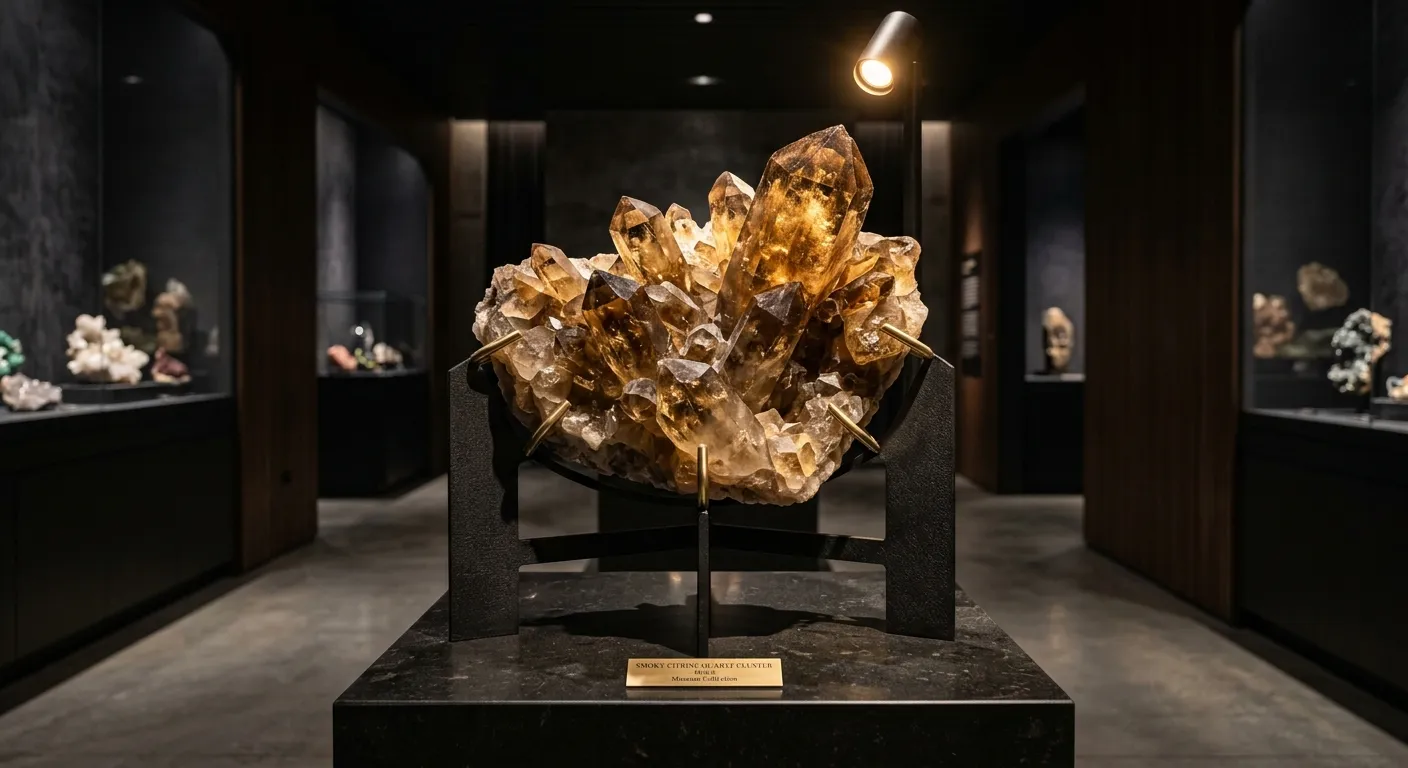
For the interior design purist or the dedicated collector, the visual impact of the stone dictates its placement. The setup demands a large, museum-grade cluster weighing over a kilogram, displayed on a custom-milled brass or matte-black steel armature.
It should be positioned in a shadowy, moody corner of a room, illuminated strictly by a low-wattage, warm-toned LED spotlight to highlight its smoky, champagne depths without risking UV degradation.
It serves as a breathtaking aesthetic focal point that simultaneously centers the atmospheric design of the room. The benefits in this scenario translate directly to visual prestige and environmental harmony.
The Value-to-Cost Ratio and Investment Metrics
Justifying the premium price tag of this specific Congo material requires a strict analytical framework. In the high-end mineral market, value is based on the specimen's size, its pristine condition, and the architectural perfection of its cascading points.
Evaluating the value-to-cost ratio requires factoring in the subjective aesthetic value and the lifespan of its structural utility. Unlike other delicate holistic tools that require constant physical maintenance, this stone remains structurally self-sustaining.
Therefore, while the initial capital output for a genuine, verified Lwena cluster remains substantial, historical market observations indicate unmatched reliability in terms of aesthetic permanence and thematic resonance. Acquiring this material means investing in a lifetime of grounded, verifiable geological craftsmanship.
Value Retention: Verified Lwena Clusters vs Market Average
References
2023
Infrared Spectroscopy of Natural vs. Synthetic Amethyst: An Update
Gemological Institute of America (GIA) — GIA.edu